
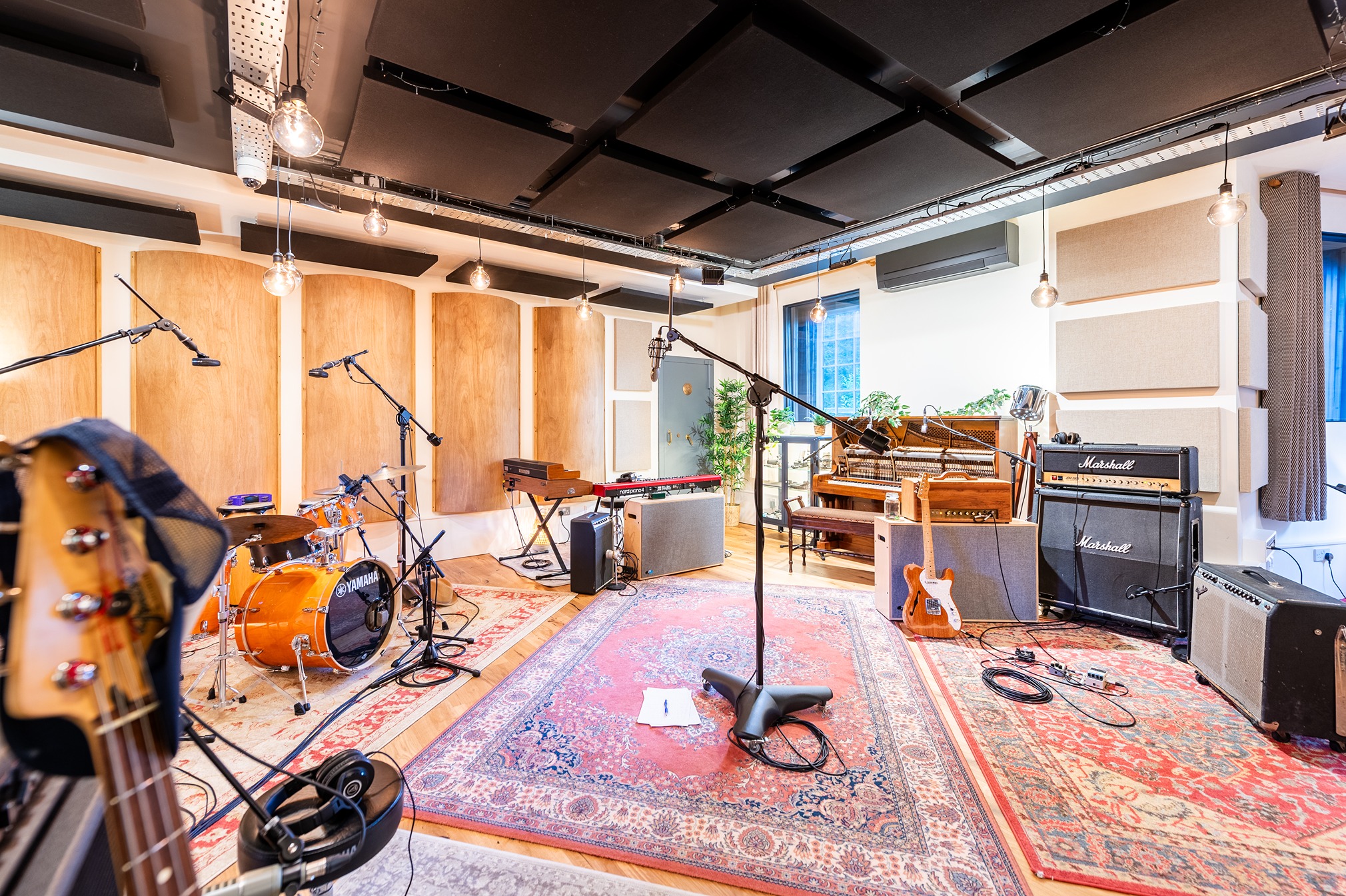
Asking "how long does it take to record a song?" in the music industry is a lot like asking "how long is a piece of string?" The answer depends entirely on what you’re trying to build. Are you a rapper looking to lay down a verse over a pre-made beat? Or are you a five-piece rock band planning to track drums, bass, guitars, and multi-part harmonies from scratch?
While there is no single deadline that applies to every project, professional studios do have realistic averages. Whether you are ready to book a recording studio for the first time or you are an experienced artist planning your next album, understanding these timelines is essential for managing your budget and expectations.
Quick Answer: How Long It Really Takes
In a professional environment, a song can take anywhere from a few hours to several days to complete, depending on the level of production required.
If you are a solo vocalist with a backing track, you might wrap up in a single afternoon. If you are building a full arrangement from the ground up, you are looking at a much longer process.
Here is a breakdown of typical recording timelines for common scenarios:
Note: These estimates cover the recording phase. Mixing and mastering are separate steps that require additional time.
What Factors Affect Recording Time?
Why does one song take three hours and another take three days? Several variables influence the clock.
Song Complexity and Arrangement
A stripped-back acoustic ballad requires far less setup and tracking time than a progressive rock anthem with changing time signatures and intricate solos. The more layers you add—orchestral sections, synth stacks, choir harmonies—the longer the process.
Number of Instruments and Vocals
Every source needs to be mic’d, sound-checked, and recorded. A drum kit alone can take an hour or more to set up and get the perfect tone. If you are recording a 10-piece funk band, just getting the "sound" right can take half a day before you even hit the record button.
Artist Preparation
This is the single biggest variable. An artist who has rehearsed their phrasing and knows their lyrics inside out can nail a take in 30 minutes. An artist who is still writing lyrics in the booth or experimenting with melodies can spend hours on a single verse.
Studio Setup and Workflow
Professional engineers are fast, but physics takes time. Changing microphones, moving baffles, and routing headphone mixes are all part of the process.
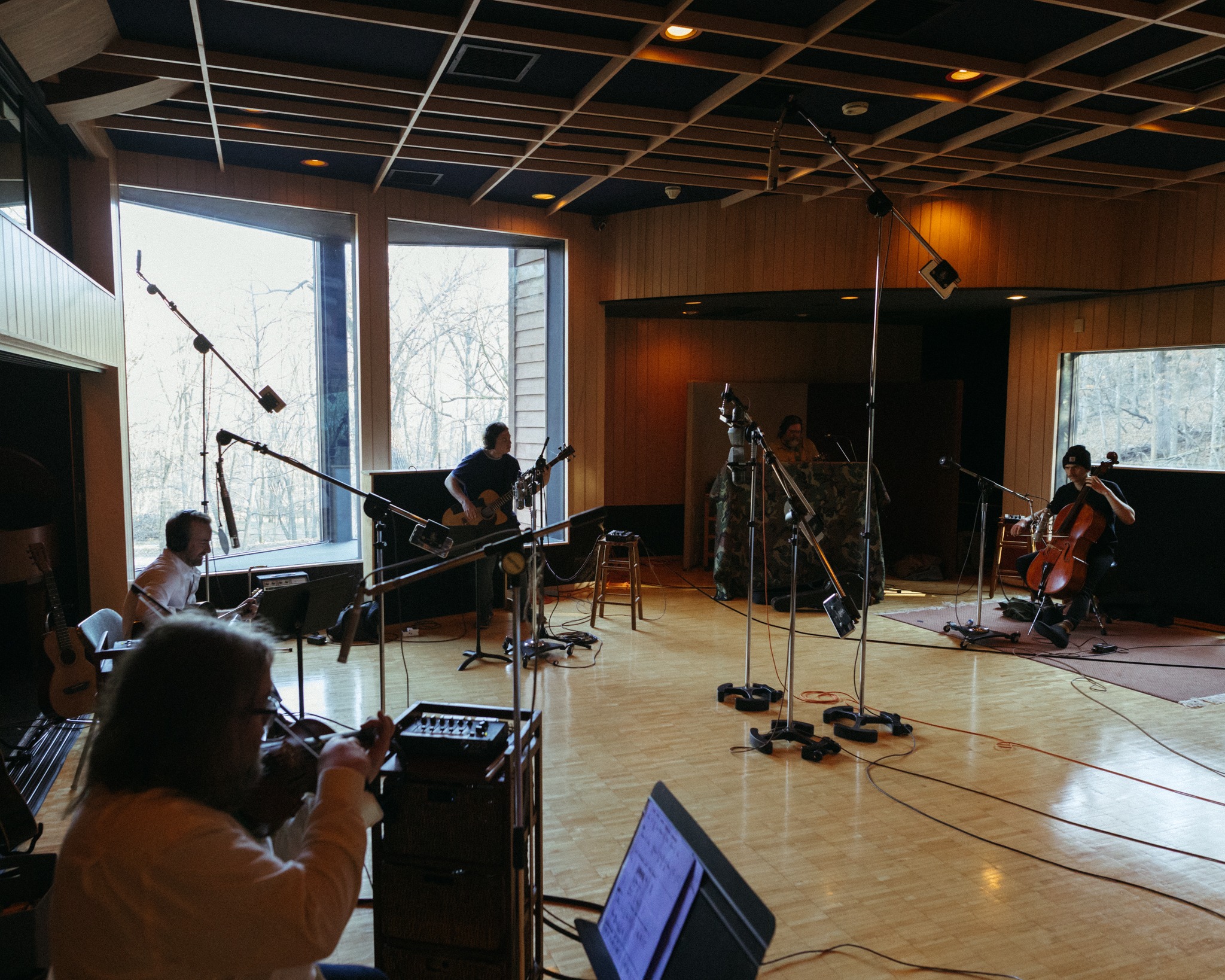
The Step-by-Step Studio Process
To understand the timeline, it helps to visualise the recording process steps.
1. Setup and Pre-Production
Before the clock starts ticking on the actual recording, the engineer needs to set up microphones and getting levels. This is also when you discuss the vision for the song.
Time: 1–3 Hours
2. Tracking
This is the "recording" proper. It usually starts with rhythm instruments (drums and bass) to establish the groove, followed by rhythm guitars or keys.
Time: 4–10+ Hours
3. Overdubs and Layering
Once the foundation is laid, you add the "ear candy." This includes lead guitars, solos, synthesizers, percussion, and finally, lead and backing vocals.
Time: Varies wildly based on complexity.
4. Post-Production and Mixing
After recording is done, the tracks need to be edited (cleaning up noise, timing correction) and mixed (balancing levels, EQ, compression).
Time: 4–8 Hours per song on average.
Related: How to prepare for your first recording session
How to Make the Process Faster and Smoother
Time is money in the studio. To get the best results without burning through your budget, focus on collaboration and communication.
- Rehearse, Rehearse, Rehearse: The studio is a place to document a performance, not practice it. Know your parts cold.
- Bring Reference Tracks: Play songs that have the "vibe" or sound you want. This helps the engineer dial in tones quickly.
- Communication: Be clear about what you want. If you don’t like a guitar tone, say so immediately rather than waiting until the track is finished.
- Use a Checklist: Ensure you have extra strings, batteries, and hard drives. A Recording Studio Session Checklist can save you from hour-long delays caused by broken gear.
For a deeper dive on securing your slot, check out our guide on how to book a recording studio session.
Impact of Musical Style and Group Size
The genre dictates the workflow.
- Hip-Hop/Pop: Often faster to record because the instrumental (beat) is usually pre-produced. The session focuses almost entirely on vocals.
- Rock/Jazz: Requires capturing the interplay between musicians. This often means "live" tracking where the whole band plays at once, which can be faster for capturing energy but harder to edit later.
- Electronic: extensive time is often spent on sound design and tweaking synth patches, which can blur the line between writing and recording.
Frequently Asked Questions
Can I record a whole song in one hour?
Technically, yes, if you are well-prepared and only doing a vocal take over a backing track. However, to get a professional, radio-ready result, one hour is rarely enough.
How long does mixing take?
A professional mix engineer typically spends 4 to 8 hours on a single song. This includes editing, balancing, and applying effects.
Does a bigger studio mean faster recording?
Not necessarily. While big studios have better equipment and assistants to help with setup, the creative process still takes time. However, a more experienced engineer at a pro studio will likely work faster than a novice.
Should I record my band live or instrument by instrument?
Recording live is faster and captures better "groove," but recording separately offers more control during mixing. Most pros use a hybrid approach: record the drums and bass together, then overdub everything else.
