
Recording Studio Session Checklist: What to Bring, Prep & Confirm Before You Record
The modern recording studio exists at the intersection of high-fidelity engineering and artistic vulnerability. Unlike a home setup where time is an abundant resource, a professional studio operates on a rigid grid of billable hours and technical exigency. In this environment, the difference between a career-defining record and a costly, compromised failure is rarely just about talent; it is the result of logistical precision and foresight.
To ensure your session is a sanctuary of creativity rather than a series of expensive troubleshooting hurdles, you need a systematic approach. This recording studio session checklist provides a granular guide for artists and producers to maximise every minute of studio time.
Essentials to Pack: Protecting the Source
The physical gear you bring determines the quality of the raw audio before it even hits a microphone. Focusing on the technical health of your instruments ensures your performance is captured with maximum fidelity.
The Musician’s Technical Arsenal
The integrity of the source signal is the single most critical variable in the recording chain. No amount of post-production processing, such as equalisation, compression, or pitch correction, can fully rectify a source that is mechanically compromised.
At Pro Studio Time, we always advise that guitar and bass maintenance is the first step. In the studio, the microscope of the Digital Audio Workstation (DAW) reveals every flaw. You must ensure your intonation is perfect across the entire length of the fretboard. A guitar that is tuned at the open strings but sharp at the 12th fret will create insurmountable harmonic dissonance when layered with keyboards or synthesised elements.
String freshness is equally vital. The spectral content of a string changes as it accumulates oils and dirt. The optimal protocol is to restring instruments 24 to 48 hours prior to the session. This allows the metal to reach its elastic limit and stabilise while retaining the "air" and harmonic definition needed to cut through a mix. For drummers, fresh heads are non-negotiable for capturing a dynamic performance. You should also lubricate all moving parts, including pedals, hi-hat stands, and lugs, to eliminate mechanical transients that sensitive condenser mics will magnify.

The "Weakest Link" Principle
Your signal flow is only as good as the weakest link in the chain. It is a common mistake to book recording studio time in a room featuring legendary vintage consoles and £10,000 microphones, only to bottleneck that fidelity with a cheap, unshielded instrument cable.
If the very first link in your signal path, the connection from your guitar, bass, or synth to the studio's outboard gear, is of poor quality, the resolution of every subsequent piece of high-end equipment becomes redundant. We consider it a professional standard to avoid cheap cables that act as low-pass filters, rolling off high frequencies and introducing electromagnetic interference. To ensure the "magic" of your performance actually reaches the converters with its full frequency spectrum intact, invest in high-quality, shielded cabling for your own instruments.
Files & Materials: Preparing Existing Projects
Digital disorganisation is a major drain on studio time and budget. Delivering correctly formatted and labelled files in advance allows the engineer to focus on the sound rather than the administration.
Technical Standards and Quality Control
You should deliver your project to the engineer or producer at least 48 hours in advance to avoid wasting billable hours. Arriving with a USB stick on the day of the session is a recipe for delay. This lead time allows the staff to perform a quality control check to ensure everything is compatible before you walk through the door.
Consistency in sample rate and bit depth is essential. Typically, this means recording at 24-bit / 48kHz to match professional studio standards. Mixing sample rates, for example, importing 44.1kHz files into a 48kHz session, can lead to clicks, pops, or pitch-shifting artifacts if not handled correctly. We also suggest being wary of the plugin trap. Never assume the studio rig has the same plugins as your home setup. If your sound depends on a specific virtual amp, rare compressor, or niche synth, you should commit or "render" those tracks to audio before you arrive.
Logical File Labelling
Your audio files must be labelled in a way that a stranger can understand immediately. Files named "Audio_01.wav" or "New_Take_Final" are the enemies of efficiency. We recommend using descriptive names like Vocal_Lead_Main_v01 or Gtr_Rhythm_L. Clear labelling saves hours of "detective work" during the mix phase. Furthermore, if you aren't bringing the full DAW project, provide "consolidated" stems. This means every audio file starts at the exact same timestamp (0:00). This ensures that when the engineer imports your files, everything lines up perfectly without them having to manually sync your tracks.
Confirm Session Logistics: The Professional Plan
Logistical oversights can halt a session before a single note is played. Mapping out your day with a tracking grid and checking venue access ensures a smooth, uninterrupted workflow.
Visualising Progress: The Tracking Grid
A professional session requires a pre-defined plan of what needs to be tracked and a clear way to monitor progress. At Pro Studio Time, we have seen firsthand how a lack of logistical planning can derail a session. A common, highly effective method is using a gridded whiteboard or a digital equivalent.
You should lay out each song or track and create a grid for every element required, such as drums, bass, guitar 1, guitar 2, lead vocal, and harmonies. As each part is successfully captured, check it off. This visual representation keeps the band and the engineer aligned, prevents you from forgetting a crucial overdub, and provides a sense of momentum as the "empty" grid fills up.
Defining Your Timings
Studio time is a finite resource, so you must figure out your schedule in advance. You need to establish the start time, specifically when you physically arrive and when the first recording actually starts. The lunch break should not be left to chance either. Decide in advance what time the room will go dark for a rest. A scheduled recharge period prevents the "post-lunch dip" from turning into a lethargic session. Finally, establish a hard stop. Knowing when you must finish helps the producer manage the pace of the afternoon effectively.
Travel and Load-In Logistics
Do not let a parking ticket or a narrow hallway ruin your creative flow. You should research the parking at the studio or surrounding areas in advance. Is there a dedicated bay for gear drop-off? You may need to factor in an extra 20 minutes to find a spot and trek your instruments across a city block.
Checking the studio’s load-in capabilities is also a priority. We have seen sessions effectively ruined because an artist brought a massive flight case that wouldn't fit through the front door or into the lift. You must let the studio staff know exactly what you are bringing. If you have an oversized Leslie cabinet or a vintage Hammond, confirm that the physical path from the street to the live room is clear.
Personnel Management: Protecting the Workspace
A cluttered control room leads to a cluttered recording. Balancing a focused workspace with the flexibility to move between tasks is essential for maintaining productivity and morale.
The "Less is More" Rule
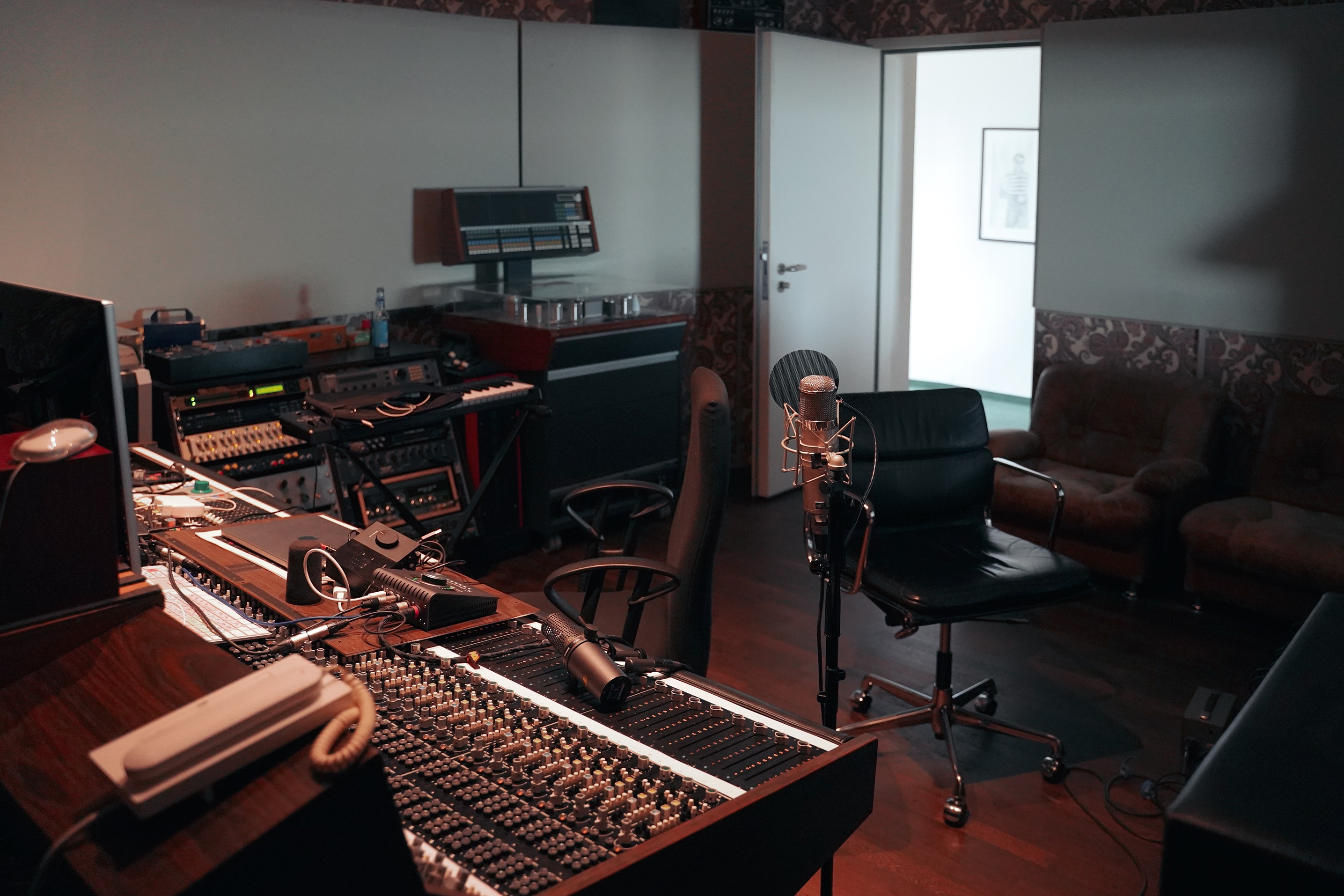
The control room is a workspace, not a VIP lounge. The "entourage effect", which involves bringing non-essential friends or partners, is a documented productivity killer. As a rule of thumb, the fewer people in the room, the better. Many top-tier producers prefer only the engineer, producer(s), studio assistant, and the musicians currently tracking to be in the room.
Anyone who isn't 100% focused on the current task is a potential distraction. One of the biggest professional faux pas is a musician "noodling" on their guitar or bass while the engineer is trying to listen to the tail of a reverb or identify a subtle phase issue. This is disrespectful and it is costing you money. Every minute spent asking someone to be quiet is a minute of billable time you aren't using to make music.
Strategic Flexibility
While the "less is more" rule holds, you should plan who needs to be in the studio on specific days. This ties back to your gridded whiteboard. It is often wise to have a "backup" musician available. If a vocalist hits a wall or isn't having their day, you don't want to grind them down or end the session early. Having a guitarist or bassist ready to move on to their overdubs allows the session to stay productive while giving the other artist a chance to reset. You should make a plan for who is recording what and when, but allow for enough flexibility that if a part needs to be finished the following morning, the schedule doesn't collapse.
Mindset & Readiness: The Power of Prep
Studio nerves are natural, but thorough rehearsal provides the muscle memory needed to perform under pressure. Strategic physical preparation further ensures your voice and body are ready for the endurance of a long day.
Building Muscle Memory
The key is to build such deep muscle memory through rehearsal that your fingers and voice know what to do even when your nerves are firing. A Neumann microphone captures confidence just as clearly as it captures insecurity. "Red Light Syndrome", the sudden anxiety when the record button hits, is real, but preparation is the cure.
We suggest focusing on sectional mastery by practising sections in isolation. In the studio, you will often do "punch-ins", where the engineer plays the track and "punches" you in to record a specific phrase or bar. If you can only play the bridge by starting from the beginning of the song, you will waste hours of billable time. You must also rehearse to a click until it feels like a heartbeat, not a taskmaster.
Fueling the Session
You don't need a strict diet, but be mindful of how food affects your output. Heavy, sugary snacks lead to energy crashes, so it is better to opt for slow-release energy. Too much caffeine can spike your heart rate and make "Red Light Syndrome" feel much worse.
For singers, certain foods like chocolate leave a heavy residue in the mouth and throat. This can lead to unwanted "mouth clicks" or a need to clear the throat constantly, which creates mechanical trauma for the vocal cords. We recommend sticking to room-temperature water and light, clean snacks to keep your takes clear.

Post-Session Tasks: Own Your Data
Your recordings are your intellectual property, and their safety is your responsibility. Establishing a rigorous backup routine ensures your work is preserved long after the studio clears their local drives.
Don't Rely on the Studio
You should never leave a session assuming your files are safe on the studio drive. It is a common misconception that the studio will archive your project indefinitely. Recording rigs fill up fast and to make room for new clients, studios frequently delete old sessions. Usually, they delete the oldest files first, but you must take ownership of your data immediately.
The Backup Strategy
Ideally, you should leave the studio with multiple backups to account for lost or damaged hardware. Before the engineer closes the project, ensure you have your rough mixes, your raw consolidated multitracks, and the DAW session files.
We recommend following the 3-2-1 rule. Maintain three copies of your data: the working drive (ideally a high-speed SSD), a physical backup drive, and one copy in the cloud. Before you depart, consult your what to bring to a recording session list one last time to ensure no pedals, cables, or power supplies are left behind.
Capture the Moment
Finally, we always recommend taking a group photo with everyone involved in the session before you head out. It sounds like a small detail, but it creates a lasting memory of the shared creative journey. Taking a moment to celebrate the hard work helps boost confidence and morale for everyone, from the band to the engineering staff. It is a simple way to solidify the professional bond and mark the end of a successful day.
Studio Etiquette: 5-Minute Rules That Save Money
Adhering to professional studio etiquette is more than just good manners, it is a financial strategy. Respecting the gear, the space, and the personnel ensures your session runs at peak efficiency.
To keep your session running smoothly and to avoid unnecessary costs or tension, we recommend following these core etiquette rules:
- Cleanliness and Tidiness: Keep the workspace tidy. Place all trash in bins, keep open bottles off the console desk, and wipe up any spills immediately to protect the equipment.
- Confidentiality and Privacy: Respect the privacy of the facility and other clients. Never take photos or videos unless the studio and everyone in the room has explicitly given their consent.
- Respect the Gear: Do not touch or move any gear without asking first. This includes microphones, stands, the console, and outboard equipment. Precise mic placement is often essential for sound quality and phase alignment.
- Limit Distractions: Ensure all mobile phones are on silent. Avoid having extra people hanging out in the control room who are not directly involved in the current task.
- Conduct and Communication: Agree on a chain of command before you start. Determine who is leading decisions (producer, engineer, or artist) and keep your feedback short and specific. Ask questions between takes, not while the red light is on.
- Time Management: Punctuality is vital. Late arrivals result in lost billable time. Know your top priorities so you don't run out of time on the most important parts of the track.
Final Thoughts
Preparation transforms the recording studio from a place of anxiety and expense into a sanctuary of efficient, captured creativity. When you prepare for your first recording session, do it with the confidence that your source is clean and your plan is solid. By managing the technical and logistical variables before the clock starts, you liberate yourself to focus on the only thing that truly matters: capturing your best performance.
