

Home Studio vs. Professional Recording Studio: Key Differences & How to Choose
TL;DR: The difference between a home studio and a professional studio comes down to the room and everything built around it. A home studio is flexible, low-cost, and always to hand, which makes it strong for writing, production, and getting ideas down. A professional studio brings purpose-built acoustics, isolation, deep equipment, and an experienced engineer, which is what matters for live tracking, acoustic ensembles, and release-critical work. Neither is better in the abstract; the right choice depends on the project. Plenty of artists use both: everyday work in a home setup, and a professional room booked for the parts that need one.
For a lot of modern music, the gap between the two has narrowed to the point where a well-set-up home studio produces genuinely releasable work. For the rest, the gap is as wide as it ever was. Both setups are useful, and this guide is not an argument that one always wins. It is about seeing where each performs well and where each falls short, so you can choose based on the work rather than on budget or assumption. We will compare them across the things that actually change the outcome: space, acoustics, equipment, staffing, collaboration, cost, and use case. The best option always depends on your goals, the quality you need, your budget, and how you like to work.
What Is the Difference Between a Home Studio and a Professional Studio?
A home studio is built around convenience and control. A professional studio is built around accuracy and the ability to capture things a domestic room cannot. Almost every other difference follows from that.
What a Home Studio Usually Means
A home studio is a recording space in a room at home, most often a bedroom, spare room, or garage. It ranges from a laptop, an audio interface, a microphone, and headphones through to a treated, purpose-built room. The equipment is chosen to fit a domestic space and a personal budget, and the work that happens there tends to be writing, production, programming, and overdubs.
What a Professional Studio Usually Means
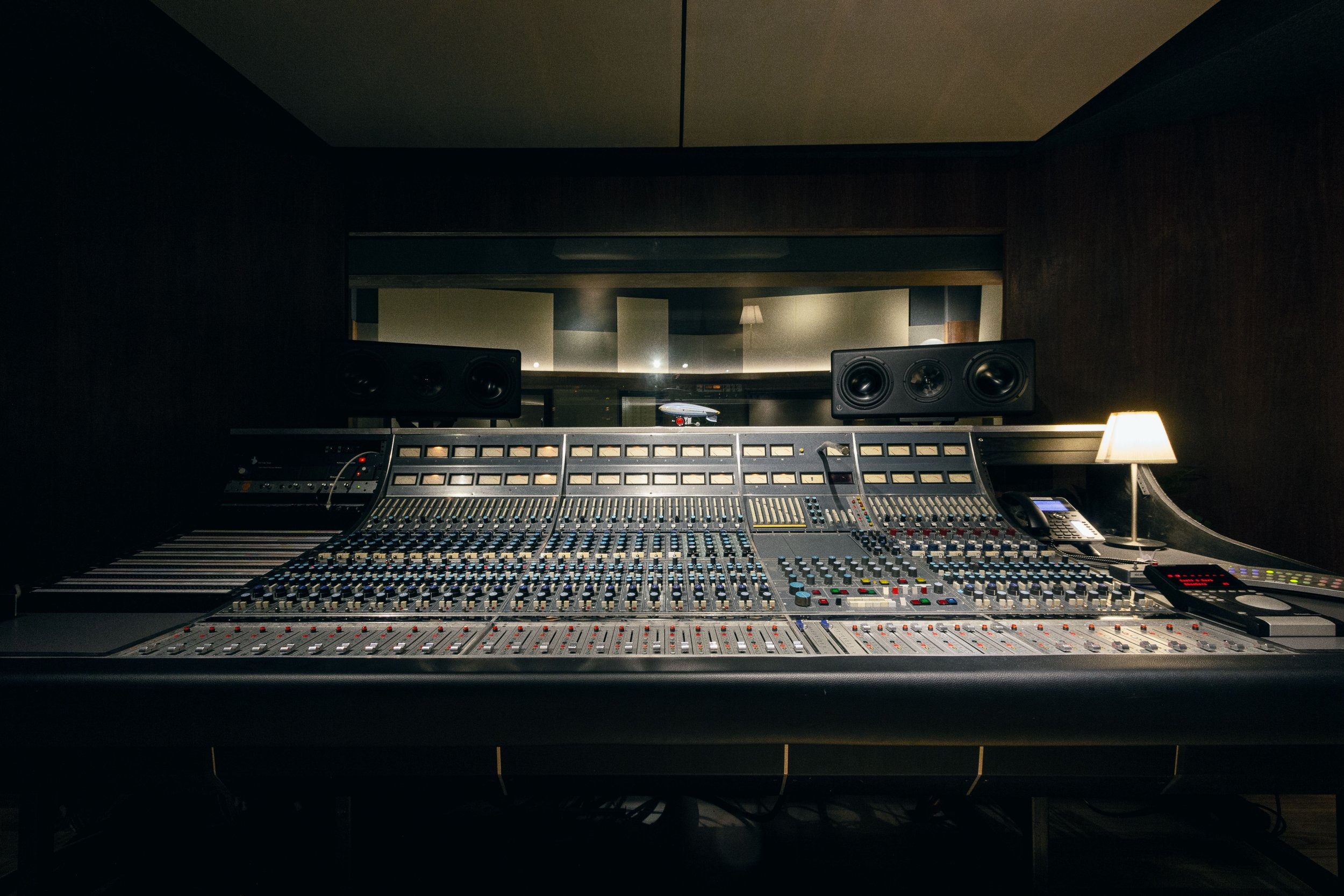
A professional studio is a commercial facility built specifically for recording and booked by the hour or day. It typically has acoustically treated rooms, sound isolation, and a separate live room and control room, along with an engineer and often assistants. The room, the equipment, and the people are all maintained for one purpose: capturing sound accurately and reliably.
The Simplest Way to Understand the Difference
A home studio gives you flexibility and comfort on tap. A professional studio gives you a room and a team engineered for results a domestic space cannot reach. Keep that distinction in mind and the comparisons below fall into place.
The Biggest Differences at a Glance
Five things separate the two in practice: the room, its acoustic control, the equipment, the people on hand, and how you pay for it.
Difference #1: Space and Room Design
A home studio works within whatever room is available, which limits its size, its ceiling height, and how many people can play in it at once. A professional studio is designed around the work, with rooms proportioned for everything from a solo vocal to a full band or a string section tracking live together.
Difference #2: Sound and Acoustic Control
A professional room is treated and isolated so that what you record and what you hear can be trusted. A domestic room is not built for that, so it stamps its own character on recordings, adding reflections, uneven bass, and outside noise, unless a great deal has gone into treating it.
Difference #3: Gear and Technical Capability
A home studio covers the essentials. A professional studio adds depth and choice, with a range of microphones for different sources, high-end preamps, hardware outboard, and accurate monitoring. That depth matters most for capture and least for in-the-box production.
Difference #4: Staffing and Support
A professional booking can include an engineer who knows the room and its equipment intimately, plus an assistant to handle setup. That experience is difficult to replicate in a home setup, where the technical side is handled by whoever happens to be in the room.
Difference #5: Cost and Flexibility
A home studio costs money to build and maintain but is then available whenever you want it, with no clock running. A professional studio is paid by the session, with less day-to-day flexibility, but nothing to own or upkeep.
Advantages and Disadvantages of a Home Studio
A home studio's strengths are access and freedom, which make it excellent for writing and production. Its limits are mostly physical: the room, and the fact that a domestic space was never built for sound.
Main Advantages of a Home Studio
The biggest advantage is unlimited, low-pressure access. You can work at any hour, across days at a stretch, and chase an idea the moment it lands, with no booking to make and no rate ticking over. That freedom, plus the comfort of a familiar space, is why so much writing and production now happens in home setups, and why the cost per session, once the room exists, is effectively nothing.
Main Disadvantages of a Home Studio
The limits are mostly about the room, and they are real. A domestic space is small, rarely isolated, and almost never built for sound, so it colors recordings and makes accurate monitoring difficult. The detail is in the acoustics section below. Capability is also capped by the gear on hand and the skills in the room, and loud sources such as drums or amps are hard to record without disturbing the household or the neighbors. More than the equipment, the room sets the ceiling on quality.
What Home Studios Are Best For
Home studios are best for songwriting, demos, pre-production, programming and beat making, editing, and getting ideas down quickly. They excel wherever you control the sources, the room's influence is manageable, and the goal is not to capture a loud live performance or a large ensemble.
Vocals are more of a mixed case, and worth being honest about. A solo lead vocal is usually recorded in a fairly tight, reflection-controlled space, so the room does not smear the sound, and most untreated home rooms do not offer that. It can still be done well at home, but it typically takes at least a reflection filter behind the microphone, and ideally some room treatment on top. A common workaround is an improvised booth, such as heavy duvets built around a frame with a reflection filter at the mic, which goes a long way toward taming an untreated space, even if it is still a step below a purpose-built vocal room.
Advantages and Disadvantages of a Professional Studio
Professional studios still command their rates because acoustics, isolation, equipment, and expertise combine to deliver results that are hard to reach elsewhere. The cost and the booking are the price of that reliability.
Main Advantages of a Professional Studio
A professional studio offers a controlled, isolated acoustic environment, so loud sources and full arrangements can be captured cleanly and monitored accurately. Layered on top is equipment depth, including professional microphones, high-end preamps, quality instruments, and tuned monitoring, along with an engineer who knows how to get the best from the room. In a 2024 Production Expert reader survey, the people who use commercial studios pointed to the space, the gear, and the on-site team as their main reasons, with tracking the most common one (Production Expert, 2024).
Main Disadvantages of a Professional Studio
The obvious drawback is cost, and with it the clock. A session has to be planned around, travelled to, and used well, which adds pressure and removes the loose, open-ended quality of working at home. For early, exploratory work, that pressure can get in the way more than it helps.
What Professional Studios Are Best For
Professional studios earn their place for live instrument tracking, full bands, and live drums, and just as much for anything that needs a large, quiet, well-behaved room. String sections, horn sections, choirs, and full orchestras are very hard to record well anywhere else, because they need space, isolation, and a room that adds the right sound. Acoustic piano belongs on that list too, especially a soft, exposed passage, where a home room's noise floor and reflections quickly get in the way. Release-critical vocals and larger productions round it out. Tracking, in the broad sense, is the classic reason to book one.
Soundproofing and Acoustic Treatment: Where the Real Gap Often Shows
The room is the thing people underestimate most, and it is where the two setups really diverge. Soundproofing and acoustic treatment are two different jobs, and an ordinary room struggles with both for reasons that come down to its shape, size, and construction.
Why Room Acoustics Matter So Much
The room shapes the sound before any microphone or plug-in touches it. Sound leaves a source, bounces off every surface, and arrives at your ears and your microphone as a blend of the original plus all those reflections. In a space built for sound, that is controlled. In an untreated room it is not, which is why you get echo, a muddy or boomy low end, and monitoring you cannot trust, so a mix that sounds right in the room often falls apart everywhere else.
Common Acoustic Challenges in Home Studios
Bedrooms and spare rooms cause specific, predictable problems. They are small boxes with hard, parallel walls, and sound bouncing back and forth between two parallel surfaces creates flutter echo, a ringing smear that dirties both recordings and monitoring (GIK Acoustics, 2026).
Low frequencies are the harder problem. Every room has room modes, resonances tied to its dimensions that make some bass notes far too loud and cancel others out, and small rooms suffer worst, because their dimensions sit close to the wavelengths of bass notes. Box-shaped rooms whose dimensions are equal or simple multiples of one another, a common shape for a bedroom, stack those resonances at the same frequencies and concentrate the damage. The result is an uneven bass response that makes low end almost impossible to mix so it translates anywhere else (GIK Acoustics, 2026).
Then there is isolation. A domestic wall does little to keep drums or a loud amp in, or to keep a passing bus, the fridge, and the street out, and genuine isolation is heavy, expensive construction, not something foam tiles address. The distinction matters: soundproofing stops sound entering or leaving a room, while acoustic treatment controls how sound behaves inside it, and they need different solutions (iZotope, 2019). The usual quick fixes, a few foam squares or a duvet pinned to the wall, do little for either the low-frequency modes or the isolation, which are the problems that cause the most trouble.
How Professional Studios Handle These Problems
A professional room is designed to sidestep all of this. Rooms are often built with non-parallel or angled walls to break up flutter echo, proportioned to spread room modes rather than stack them, and treated with real depth, including thick broadband absorption and corner bass trapping for the low end, with diffusion to keep the space from going lifeless (GIK Acoustics, 2026). Add proper isolation and monitors set up in a tuned position, and you get a room where what you hear is reliable and what you record translates.
Equipment and Setup: What Changes Depending on the Space
Home and professional studios overlap on gear more than people assume. The real difference is depth, choice, and how much the room supports the equipment, not whether a microphone or a DAW is present.
What a Home Studio Setup Usually Includes
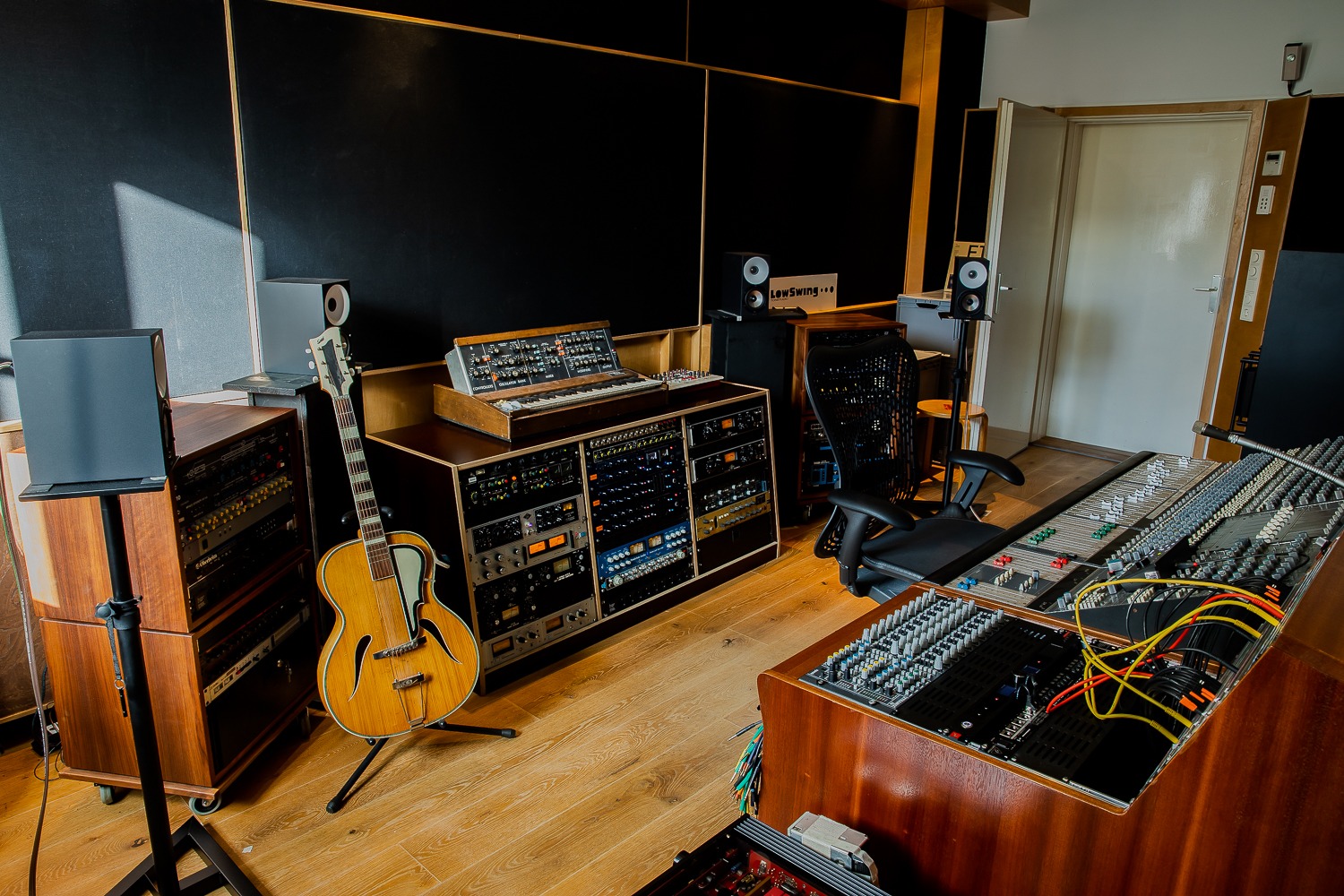
A typical home studio is built around a home recording kit: a laptop or desktop running a DAW, an audio interface, a pair of studio monitors, one or two microphones, and often controllers, synths, or sample drives. It is a complete signal chain in miniature, and for writing and in-the-box production it is frequently all that is needed.
What a Professional Studio Setup Usually Includes
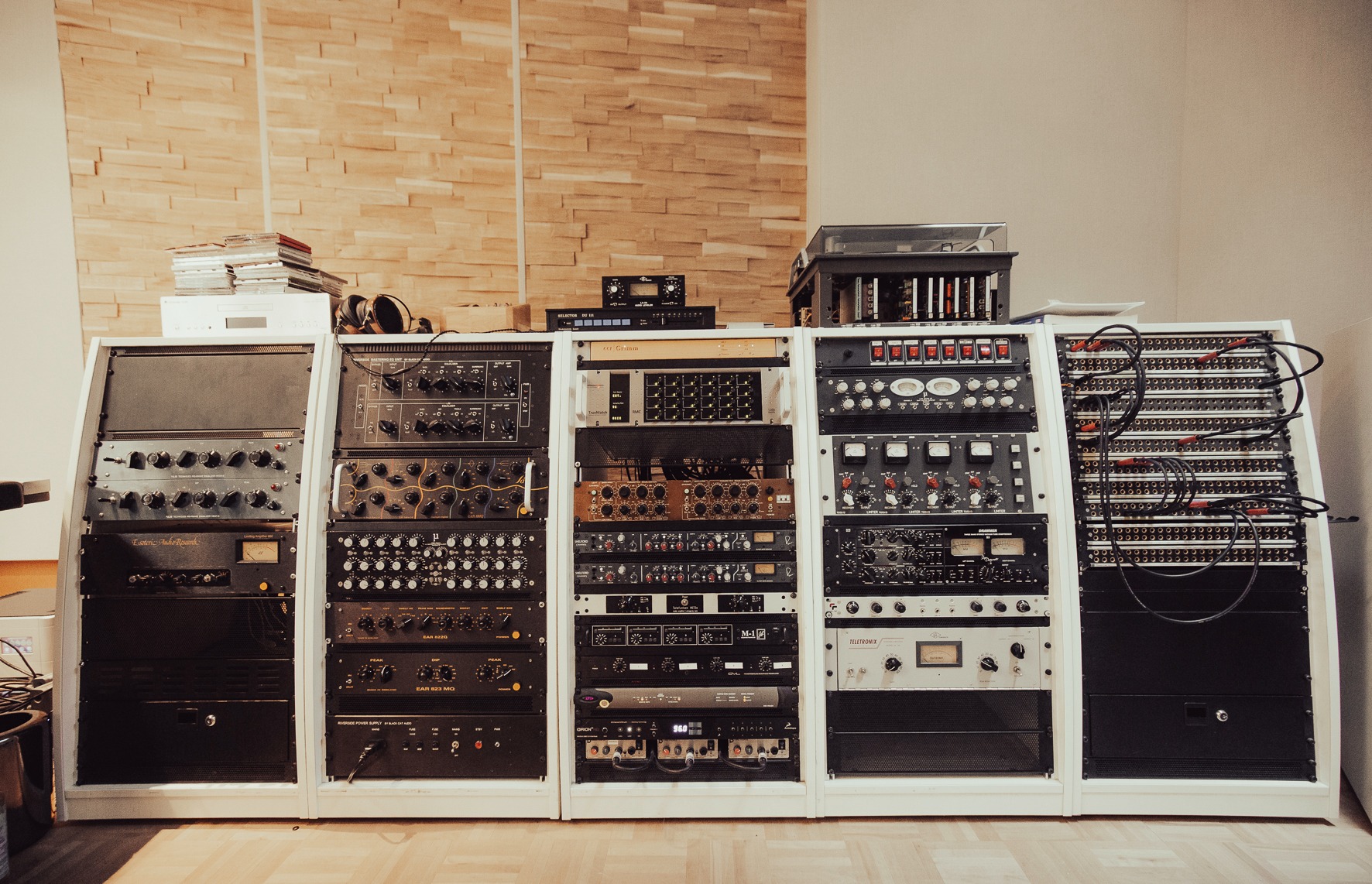
A professional studio offers the same building blocks in far greater depth: a range of professional microphones for different sources, high-end and sometimes vintage preamps, quality instruments, and monitoring chosen and positioned for accuracy. The value is choice, meaning the right microphone for a particular voice rather than just the one you own, inside a room that lets that gear perform.
Different Projects Need Different Gear
What you actually need depends on the source. A band tracking drums often needs a kick mic, snare mics, tom mics, overheads, and a room mic, plus a room big enough to use them; DJs and electronic artists may want a controller, CDJs, and a mixer; podcasters need a clean spoken-word chain; producers need flexible routing and reliable monitoring. Matching gear to the job matters far more than owning the most of it.
Skill Level, Staffing, and Technical Support
The room and the gear are only part of the story. Who runs the session, and how well they know the room, often shapes the result as much as the equipment.
What You Usually Handle Yourself in a Home Studio
In a home setup, the engineering, editing, arranging, and troubleshooting sit with the artist or a close collaborator, alongside the performing. For a self-sufficient producer that is a strength, offering complete control and no one else to coordinate. For an artist who would rather focus on the take, it means the technical work is always partly theirs to carry.
Who You May Have Access To in a Professional Studio
A professional booking can put specialists in the room: a recording engineer who knows the space and its gear, often an assistant for setup, and, depending on the session, a producer, mixing engineer, or mastering engineer. What they bring is not just extra hands but experience of that particular room, and of many sessions like yours, which is hard to match from outside.
Why Experience Can Change the Outcome
An engineer who knows the room makes faster decisions, steers around its known problems, and captures better takes while keeping the session moving. Just as valuable is what they bring from outside your project: someone who has worked on hundreds of sessions has almost certainly met your problem before, knows a few ways to solve it, and can hear the recording with an objective ear. That depth of reference, built across many artists and many rooms, is something a person working alone on their own music rarely has, and it tends to show in the choices made in the moment. All of it frees the artist to concentrate on performing, which is one of the less visible reasons a professional session can feel markedly smoother than working alone.
Collaboration Opportunities: Working Alone vs Working With Others
Look past the room and gear to the people. How collaborative a project is often points clearly toward one setup or the other.
How Collaboration Works in a Home Studio
Home studios lean toward remote and asynchronous collaboration: self-producing, sharing files, and streaming a session to collaborators in real time with tools like Audiomovers. It works well for beat-makers, songwriters, and vocalists collaborating across cities, provided everyone is comfortable working apart.
How Collaboration Works in a Professional Studio
A professional studio is set up for people to work together in person: session musicians and vocalists, a producer in the room, and real-time back-and-forth that lets ideas change in the moment. A booked room is also neutral ground, which matters when a group who do not all know each other need somewhere to work.
Which Setup Supports Your Creative Process Better
It comes down to how many people are involved and how much of the work has to happen together, live. Solo and remote-first projects are well served by a home setup; sessions built around several people playing or deciding together in real time are what a professional studio is for.
Cost Considerations: Price, Value, and Ongoing Expenses
Comparing a studio rate against "free" home recording misses the real picture. A home studio carries steady, easily overlooked costs, while a professional studio buys speed and certainty for the session. The useful question is value, not headline price.
The Real Cost of a Home Studio
A home studio's cost is spread out and easy to underestimate: the gear, the space, any treatment or isolation, upgrades over time, upkeep, and the hours put into learning and troubleshooting. Getting a room to actually sound good is the expensive part, because treatment and isolation cost real money, and a genuinely good-sounding room is a serious build.
The Real Cost of a Professional Studio
A professional studio is priced per session, whether hourly, by the half or full day, or as a project rate, reflecting the space, the gear, the upkeep, and the staff. As a rough benchmark, our guide to recording studio rates puts most professional rooms between $30 and $300 an hour, with full days commonly $300 to $1,200 and higher in flagship rooms.
How to Think About Value, Not Just Cost
Value is about outcomes: the speed of an experienced engineer, fewer mistakes, and a result a home setup may not reach. The real questions are whether the project needs that level, and whether booking a room for the few parts that need it costs less than building your own to the same standard. For most people, it does.
Which Setup Makes Sense for Different Use Cases?
The clearest way to decide is to match the setup to the job. Here are five common cases and where each usually lands.
Use Case #1: Writing, Demoing, and Early Ideas
A home studio is almost always right here. Writing and demoing reward speed, comfort, and unlimited time far more than pristine acoustics, and capturing an idea as it arrives matters more than capturing it perfectly.
Use Case #2: Release-Ready Singles or Albums
Release-critical work often benefits from a professional room, at least for the parts that have to meet a commercial standard. Where acoustics, monitoring, and final quality matter, the controlled room and an experienced engineer earn their keep.
Use Case #3: Bands and Live Instruments
This is the strongest case for a professional studio. Full bands, live drums, and several musicians playing together need space, isolation, and a room that behaves, and so do larger acoustic ensembles. String and horn sections, choirs, and full orchestras are close to impossible to capture well at home. Acoustic piano belongs here too, especially quiet, exposed playing, where background noise and room reflections are hard to keep out of the recording. These are limits of space, isolation, and room design rather than budget.
Use Case #4: Podcasts, Voice Work, or Content Recording
A home studio usually handles spoken word well, since a small, treated space suits a single clean voice. A professional room becomes worth it mainly for multi-person sessions, tight turnarounds, or when consistency across many episodes matters.
Use Case #5: Producers, DJs, and Electronic Music
Electronic and in-the-box production suits a home studio well. The work centers on a DAW, controllers, and monitoring rather than live capture, so a well-set-up personal room is often not just adequate but preferable.
How to Choose Between a Home Studio and a Professional Studio
Five questions settle most decisions: what you are making, the quality you need, the skills you have, your budget and timeline, and whether your room helps or hurts the work.
Question #1: What Are You Trying to Make?
Start with the deliverable. A demo, a podcast, or a rough vocal is home-studio work; a marketable song, a full production, or final vocals that have to compete commercially point toward a professional room, at least for those stages.
Question #2: What Quality Level Do You Need?
Be honest about the bar. If the recording has to stand up against commercial releases on any playback system, the room and the engineering matter a lot. If it is a work-in-progress or an idea, that bar is lower and a home setup is usually fine.
Question #3: What Skills Do You Already Have In-House?
Ask whether you can record yourself well, whether you need an engineer or a producer, and whether you can solve technical problems under pressure. The less comfortable you are running the session's technical side, the more a staffed professional room is worth.
Question #4: What Is Your Budget and Timeline?
Weigh money against time. A tight budget with a flexible timeline favors a home setup; a firm deadline and a need for reliable results can make a focused, booked session the more efficient spend, even at a higher day rate.
Question #5: Will the Space Help or Hurt the Process?
Look hard at the actual room. Its size, shape, isolation, and how much it distracts all shape the work, and if it is a small, untreated box, a professional room can be the difference between a recording that works and one that never quite does.
Can You Use Both? Why Many Artists Combine Them
For most working artists the answer is not either/or. A hybrid approach, a home setup for some stages and a professional room for others, captures the benefits of both while keeping the cost down.
A Hybrid Approach Often Works Best
A common workflow is to write and pre-produce at home, book a professional studio to track the parts that need a proper space, such as live drums, a full band, or release vocals, then finish mixing or mastering wherever makes sense, including dedicated online mastering. Each stage happens in the environment best suited to it, and studio time is spent only where it counts.
When Combining Both Setups Makes Sense
Combining makes sense whenever a project has clearly different needs at different stages: unlimited experimentation early on, then a controlled, isolated room for the moments that have to be right. It is usually the most cost-effective route to a professional-quality result, because it puts studio money only where it changes the outcome.
Common Mistakes People Make When Comparing Home and Professional Studios
Most bad calls come from comparing the wrong things. These five trip people up most often.
Mistake #1: Thinking Home Studios Are Always Too Limited
A well-set-up home studio can produce genuinely releasable work, especially for production, songwriting, and electronic music. Writing it off ignores how much of today's commercial music is made in exactly that kind of space.
Mistake #2: Assuming a Professional Studio Is Always Necessary
Equally, booking a studio for work a home setup would handle fine, wasting money and time. A professional room is a tool for specific jobs, such as tracking, isolation, or a space you cannot build, not a default for every recording.
Mistake #3: Comparing Gear but Ignoring the Room
People fixate on microphones and preamps while overlooking the space, yet the room is usually the bigger factor in how a recording sounds, and the hardest thing to fix afterward. A great mic in a boxy, untreated room still sounds like a boxy, untreated room.
Mistake #4: Ignoring Skill Level and Staffing
The best room and gear will not rescue a session if no one present can run it well. An honest read of your own engineering skill belongs in the decision from the start.
Mistake #5: Choosing Based on Cost Alone
Picking the cheapest path ignores value: speed, fewer mistakes, and whether the result actually meets the project's needs. The lowest price is not the same as the best spend.
Conclusion
The right choice is not about image or status. It is about what the project needs.
A home studio can be the best option for flexibility, experimentation, and lower-cost work, while a professional studio is worth booking when acoustics, isolation, staffing, and final quality matter more. Neither is universally better; they are built for different jobs. The artists who get the most from both are usually the ones who understand precisely where each fits, happy to do the everyday work in a home setup, and to book a professional room for the parts that need one.
If a professional room is right for part or all of your project, tell us what you need, and we will help you find a studio that fits your location, budget, and session type. It is also worth reading our how to book a recording studio session guide and running through a recording studio session checklist before the day, so you make the most of the time.
FAQs
Can you upgrade a home studio over time instead of booking a professional studio right away?
Yes, and many people do. Building a home setup incrementally, essentials first and then treatment and gear as budget allows, is a sensible path, but prioritize the room and its acoustics early, since that is where the biggest gains hide and where an untreated space quietly holds everything back.
Is renting studio time better than buying more gear?
It often is, especially for occasional needs like live drums or a full band. Booking a room for the few stages that require it usually costs far less than buying and maintaining equipment, and building a space, you would use only rarely.
Do professional studios always include mixing and mastering?
Not automatically. Many studios focus on recording and tracking, with mixing and mastering offered separately or handled by specialists. Because those services are more predictable than recording, they are often priced per track rather than by time, so confirm what is included when you book.
Can remote collaborators work well if you mainly record at home?
Yes. File sharing and real-time streaming tools like Audiomovers let you work with collaborators anywhere, and most people who record remotely with studios say they would do it again (Production Expert, 2024). In-person sessions still tend to feel more natural, but remote work is a proven option.
What should you fix first if your home recordings do not sound professional?
Start with the room, not the gear. Basic acoustic treatment, meaning absorption for reflections and bass trapping in the corners for the low end, usually does more for the sound than a new microphone, because the room's influence is the hardest problem to correct after the fact.
Is a project studio closer to a home studio or a professional studio?
A project studio sits between the two: a dedicated, semi-professional space, often run by a producer or engineer, built for serious work without the overheads of a large commercial facility. The line between a strong project studio and a small commercial one is increasingly blurred.
