
Types of Recording Studios Explained: From Home Studios to Professional Facilities
“Recording studio” is one of those phrases that sounds specific but covers an enormous amount of ground. Two facilities can both describe themselves as recording studios and be built for completely different work. One might be a single treated room set up for vocals and production. Another might be a large tracking facility, with a live room big enough to take a full band, several isolation booths, racks of outboard, and a mic cupboard with something for every flavour of sound.
The differences matter because the right studio depends on what you are actually trying to do. The most useful way to think about studio types is not size or location, but function: what a space is built to do well. This guide walks through the main categories you will come across and how to match them to your project.
What “Types of Recording Studios” Actually Means
Most introductory guides sort studios by setting: home studios at one end and commercial facilities at the other. That is a reasonable starting point, and it maps onto the budget fairly well, but it is not how working engineers and producers tend to talk about studios.
In practice, studios are described by purpose. You will hear people refer to a tracking room, a writing room, a programming room, a mix room, or a mastering suite. A large facility often houses several of these under one roof, each set up for a different stage of making a record. Booking the right type of room for the job at hand will do more for your results than booking the most impressive-looking space you can find.
It is also why session type, rather than genre, tends to be the better filter when you are deciding where to record. We cover that in more depth in our guide to how to find the right recording studio.
Home Studios
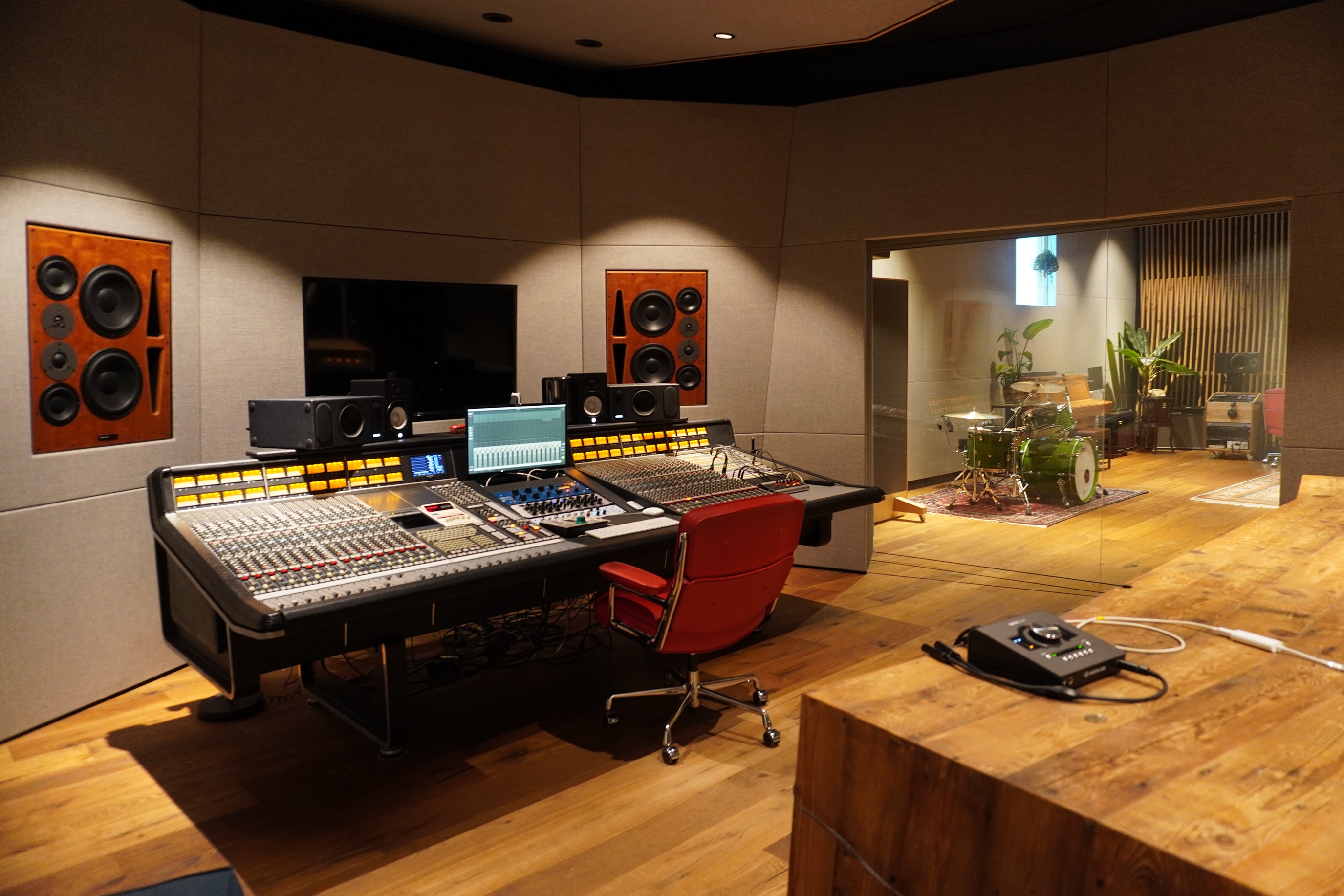
For a lot of musicians, the first studio they use is their own. A home studio can be anything from a laptop, an interface, and a single microphone in a spare room, through to a well-treated, purpose-built space in a converted garage or outbuilding.
It is tempting to treat home versus professional as a simple binary, but the reality depends heavily on budget and build quality. A carefully designed home setup with proper acoustic treatment and decent monitoring can produce genuinely releasable work, while a hastily assembled one in an untreated room will struggle, mostly because of how the room itself colours the sound rather than because of the gear.
In practice, most home studios are used for a combination of writing and programming, vocal recording, and mixing. Louder instruments are harder to manage, since volume restrictions in a domestic setting only allow for so much, and full drum kits, amplified guitars or several musicians playing at once tend to need a larger, better-isolated room than a home space can offer.
Tracking Studios
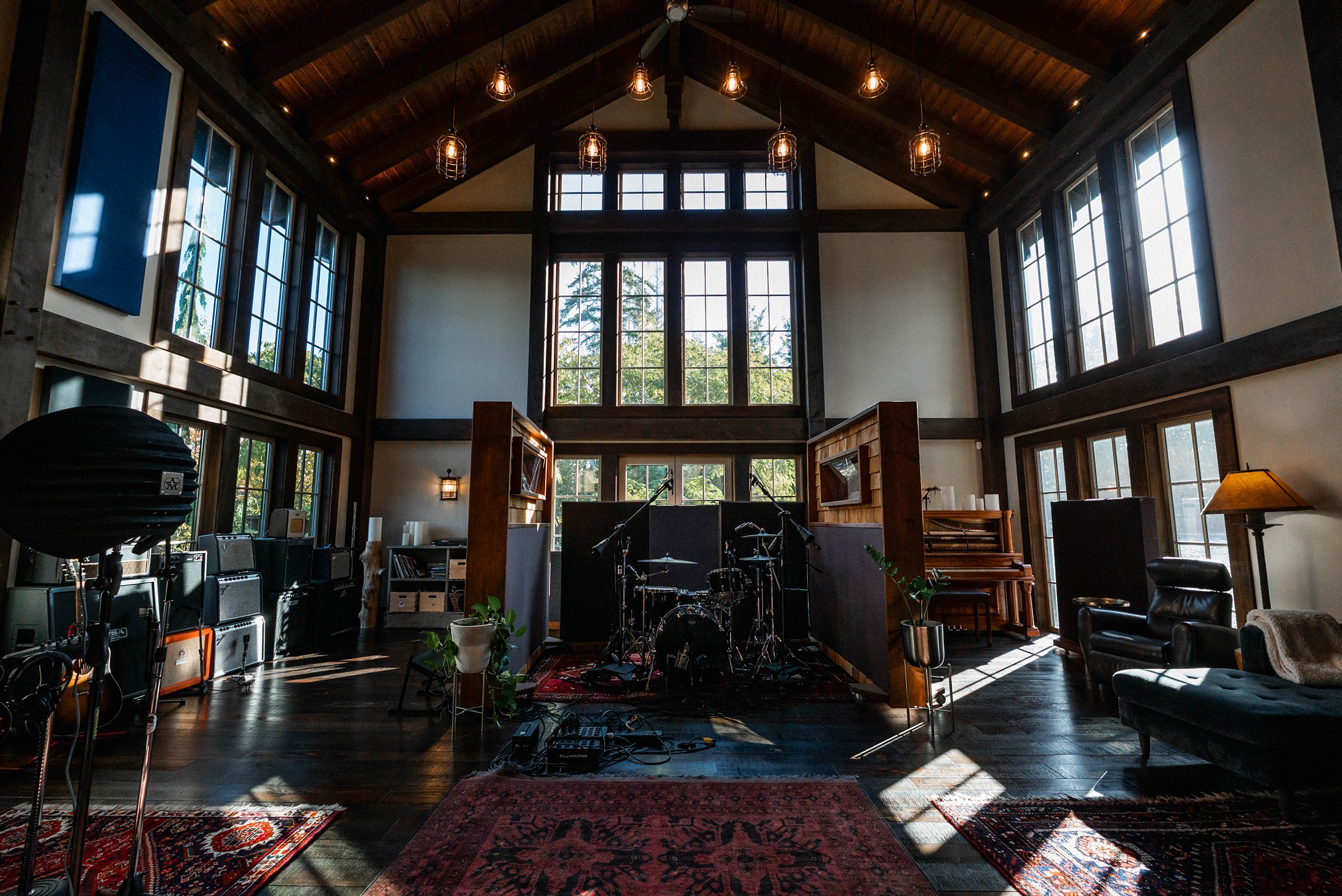
When people picture a professional recording studio, they are usually picturing a tracking studio. This is a facility built around capture: getting the best possible recording of a performance.
The defining features are a large live room, and sometimes several rooms of different sizes and acoustic characters, the ability to record a high number of inputs simultaneously, racks of outboard equipment, and an extensive microphone cupboard. Tracking studios are the right call for full-band sessions, live drums, ensembles, and any recording where real acoustics and a high simultaneous input count genuinely matter. For a full session, an engineer who knows the room is always part of the picture, and because these tend to be large, involved setups, an assistant is usually on hand as well to handle setup, patching and the running of a busy room.
Writing Rooms and Programming Rooms
Not every room in a studio is built for capturing a finished performance. A good deal of modern music begins in writing rooms and programming rooms, which prioritise comfort, speed and creative flow over large-room acoustics.
A writing room, sometimes called a writing suite, is set up for songwriting and topline work: a comfortable space with a capable monitoring setup and a selection of instruments to hand, typically guitars, a bass, synths and keys of some kind, so ideas can be captured as quickly as they arrive. The format goes back decades, from the writing cubicles of the Brill Building era to the dedicated suites you find in larger complexes today, and it underpins the writing camps that publishers and labels run to put writers and producers in a room together.
A programming room is geared towards production: beat-making, electronic music, and in-the-box work built around a DAW, synths, samplers and controllers. The term comes from programming drums and sequenced parts rather than playing everything live. These rooms are often where a track takes shape before, or instead of, a full tracking session.
Mixing Studios
Once the parts are recorded, mixing is where they are balanced into a finished-sounding whole. Purpose-built mixing studios do exist, but historically mixing has tended to happen in a room built for something else that doubles up for the job. The clearest example is the large tracking studios of the 1970s, whose control rooms often sounded good enough that the record would be mixed in them too. There was a technical reason for that as much as an acoustic one: analogue mixing demanded a large-format console and racks of outboard, the kind of gear only a full studio could house, so you needed the equipment as much as the room. That was a time when every stage of making a record except mastering could take place under one roof, from the first take through to the final mix.
Today, mixing happens largely in the box, and that equipment requirement has fallen away. And, although commercial studios with great-sounding control rooms do still exist, mixing is no longer something people tend to hire one for. Much like mastering, it is now more often done remotely, in the mix engineer's own setup.
In practice, almost any control room can serve as a mixing studio, as long as it sounds balanced and translates well to the outside world.
Mastering Studios
Mastering is the final specialist stage, and mastering studios are the most precisely tuned rooms in the chain. They combine heavily treated acoustics with mastering-grade monitoring and conversion, run by engineers who tend to do this and little else.
Where mixing balances the individual elements within a song, mastering works across whole songs and a body of work: refining overall tone and level, and sequencing tracks so that an EP or album holds together from start to finish. In most cases you send your final mixes to a mastering engineer rather than booking the room yourself, though attending the session is an option some engineers offer.
Residential Studios
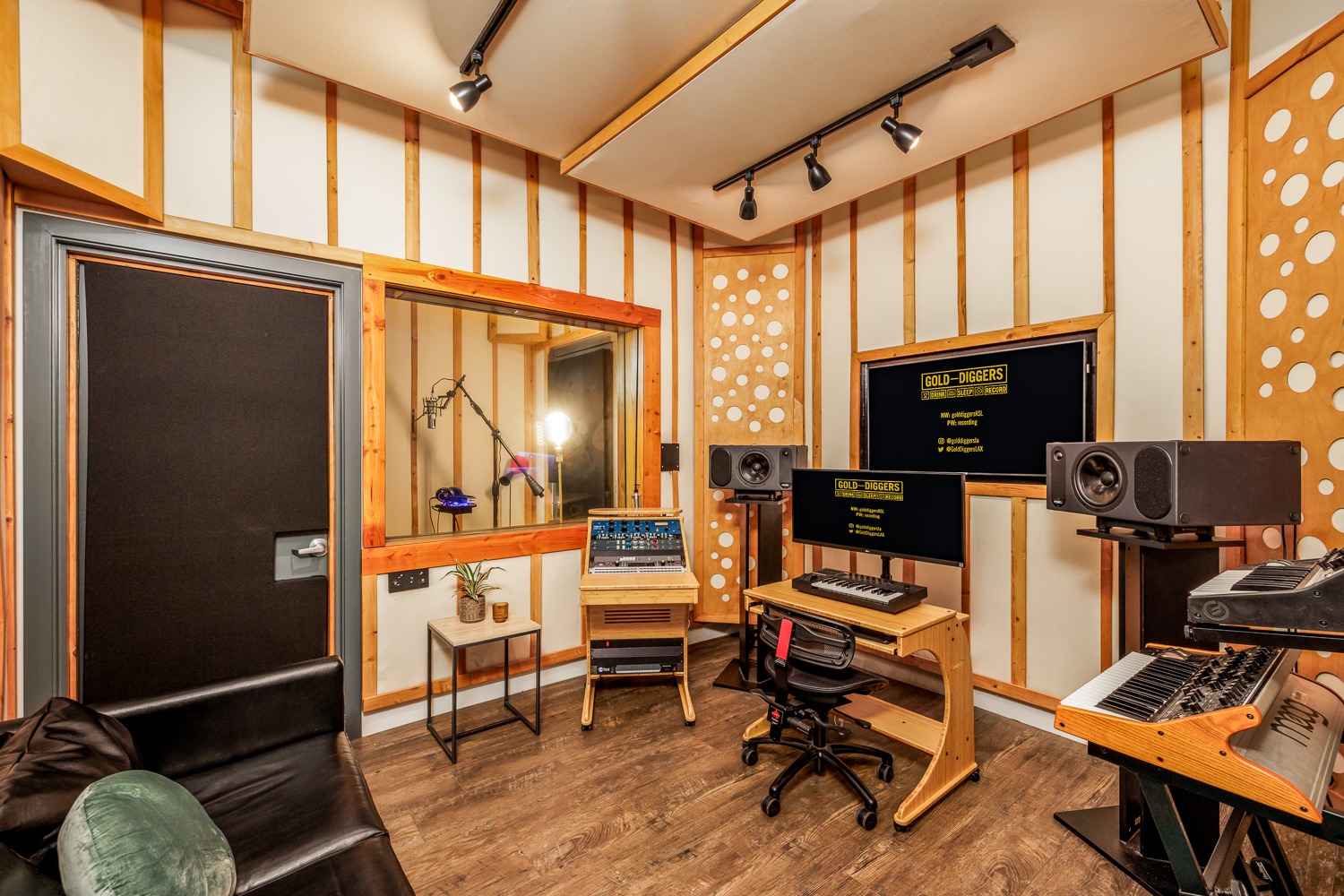
A residential studio is one you can live in for the duration of a project. Bands and artists stay on site, often somewhere rural and removed from everyday distractions, and work without the daily commute breaking the creative momentum.
The model has a long history in the UK. Rockfield, in the Welsh countryside near Monmouth, is widely recognised as the world’s first residential studio, and Peter Gabriel’s Real World near Bath is another well-known example. Most residential studios are full tracking facilities in their own right; what they add is immersion.
That immersion is the real draw, and it speaks to something studios increasingly compete on. A studio is not only a technical resource. As Brian Eno’s idea of the studio as an instrument suggests, the environment itself shapes what gets made. Taking yourself out of familiar surroundings, with everyone focused on the same work in the same place, tends to change how a record comes out. For many artists today, how a studio makes them feel is as much a reason to book it as its equipment list. Residential bookings sit at the higher end of the budget scale, but for the right project the creative payoff can justify it.
Mobile and Remote Recording
Two further options are worth a mention. Mobile recording brings the equipment to the source: location and outside-broadcast setups used for live capture, or for recording somewhere a fixed studio cannot go. It is specialist work rather than an everyday booking.
Remote collaboration has also become routine, with parts recorded in different places and shared between collaborators. This is better understood as a way of working than as a distinct kind of studio, and it still relies on the rooms and the people at each end being up to the job.
How Layout and Equipment Change by Studio Type
Beyond price, the practical differences between studio types come down to space and kit.
Layout follows function. A tracking studio devotes most of its footprint to recording space and isolation, with a control room to oversee it. A writing or programming room can be compact, because the work happens largely in the box. Mix and mastering rooms put almost everything into the control environment and the monitoring, with little or no separate recording space.
Equipment follows the same logic, and what you can expect changes a lot by room. A tracking studio is the most heavily equipped, often with a large-format console, racks of outboard, and a sizeable microphone cupboard with options for every kind of source. A writing room carries a more limited selection of mics and outboard, but adds the instruments mentioned earlier. A programming room is frequently no more than a pair of speakers, an interface, and sometimes a vocal chain, since the work lives in the computer. Mixing is more about the environment than any single piece of kit: in the analogue era you needed a large-format console to mix at all, whereas today a programming room can double as a mix room when everything is being done in the box. Mastering studios sit at the specialist end, typically running large, full-range monitoring, a selection of mastering-specific outboard, and, where vinyl is offered, cutting equipment such as a disc cutting lathe.
How to Choose the Right Type of Recording Studio
A few practical questions narrow the choice down quickly.
Start with what you are actually doing. Tracking live musicians, writing and producing, mixing and mastering each point to a different kind of room, which is why session type is a far more reliable filter than genre. Two artists working in the same genre can need completely different spaces depending on whether they are tracking a live band or recording vocals, for example.
Next, think about who is running the session. A full tracking session always has an engineer, and at larger studios an assistant too. The question for you is whether the studio provides them or whether you are bringing your own, and it is worth settling that before you book rather than on the day.
Budget then shapes the shortlist, and being upfront about it works in your favour. A clear figure lets a studio tell you what is realistic, and there are times when a gap in the diary leaves room to negotiate. Our guide to recording studio rates goes into how pricing tends to work.
Finally, check the studio is genuinely ready for your session: that the gear you are counting on is in good order and available on your dates, since specialist and vintage pieces do go out for servicing from time to time. Our recording studio session checklist is a useful prompt for the practical details to confirm before you commit, and how to book a recording studio session walks through the booking itself.
Conclusion
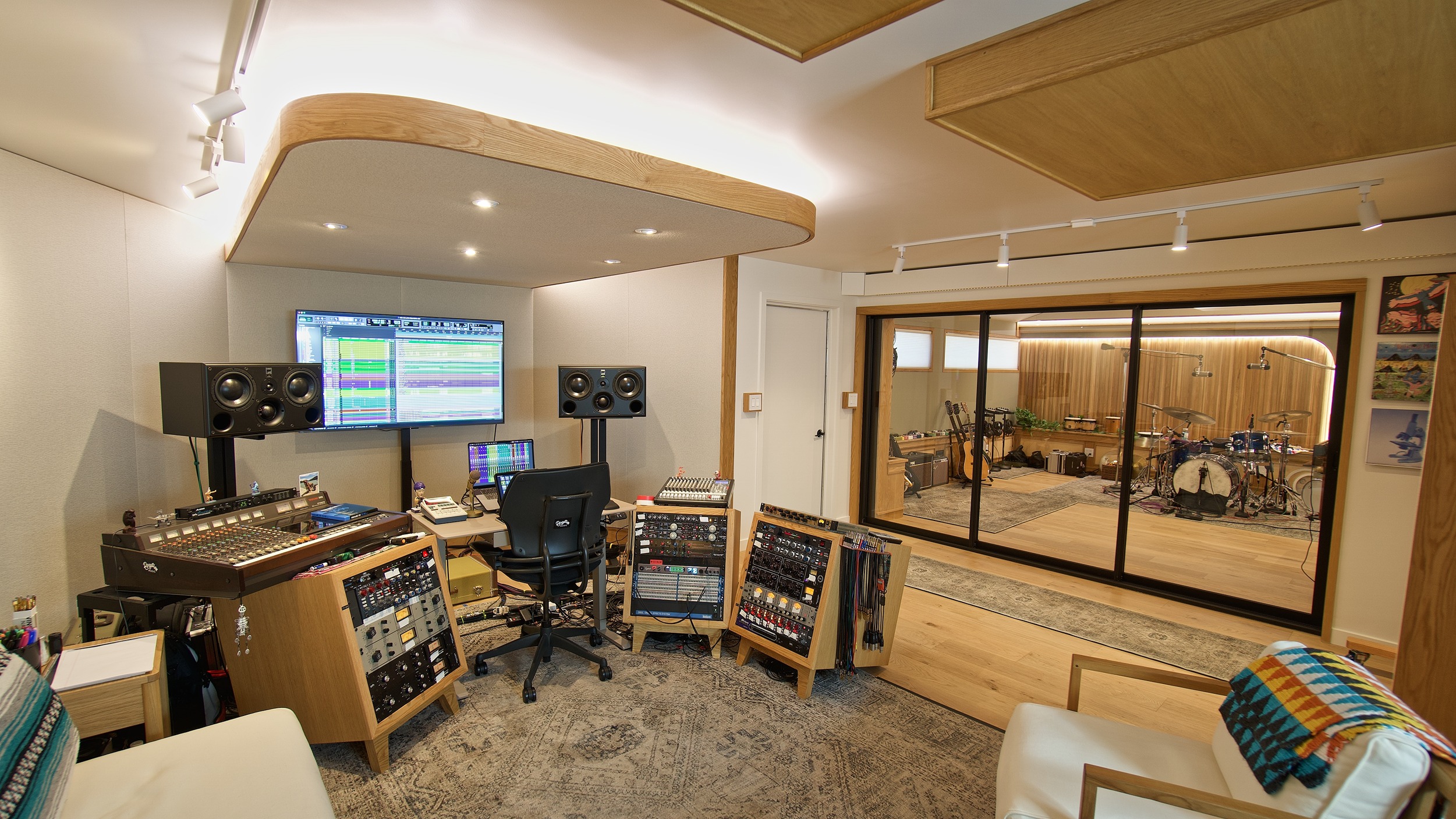
The best recording studio for your session is not necessarily the biggest or the most expensive one. It is the one that fits the work you are doing, your budget, your workflow and your creative goals. Once you can tell the difference between each type of studio, choosing well becomes far more straightforward, and you walk into your recording studio session knowing the room is right for the job.
FAQs
What are the main types of recording studios?
Studios are best grouped by what they are built to do: tracking studios for recording performances, writing and programming rooms for songwriting and production, mixing studios for balancing recorded parts, mastering studios for the final stage, and residential studios you can stay in for the duration of a project. Many large facilities combine several of these under one roof.
What is the difference between a home studio and a professional studio?
It is less a hard line and more a question of budget and build quality. A well-treated home studio can produce releasable work, especially for production and songwriting. Professional tracking facilities pull ahead when you need to capture live performance, several musicians at once, or large acoustic sources in a properly designed room.
What is a hybrid recording studio?
A hybrid setup usually describes a setup that combines computer-based recording with analogue equipment such as outboard processing and a console, rather than working entirely in the box. In practice, most modern studios are hybrid to some degree, mixing digital convenience with selected analogue gear.
How much does it cost to record in a studio?
Rates vary widely by studio type, location, equipment, and whether an engineer is included. A smaller, independent studio will usually sit well below a large tracking facility or a residential booking. Being clear about your budget helps a studio steer you towards what is realistic for the session you have in mind.
How do I choose the right type of recording studio?
Start with the session, not the genre. Decide whether you are tracking, writing or recording overdubs, then weigh up the support you need, what your budget allows, and how much room acoustics and reliability matter for the work. Match those answers to the type of studio built for that job.
